The Complete Guide to Gaining Weight
For many people, exercise and fitness are forever linked to weight loss. But there's a time and a place to gain weight, as well—and it can be just as tough! Athletes and everyday people need or want to gain muscular weight for aesthetic goals, sports, or health reasons. And their first impulse is often simply to "eat a lot more," without much strategy beyond that.
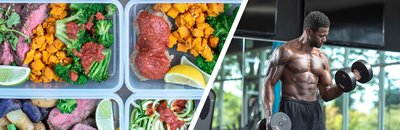
So let's set the record straight. Just like with weight loss, it's important to gain weight in a healthy way. This is sometimes known as a "clean bulk." Doing a clean bulk means combining strength training and eating nutrient and calorie-dense foods to gain as much "quality" weight, or lean muscle mass, as possible. The nutrients in whole, unprocessed foods will help you build it, and support the rest of your body's systems along the way. Processed foods and empty calories, on the other hand, are more likely to add fat than muscle.
"Gaining quality weight—in other words, mostly lean muscle mass and relatively little fat—is harder than it gets credit for," explains registered dietician Doug Kalman, Ph.D. in Bodybuilding.com's Foundations of Fitness Nutrition course. "How you train is just one part of the formula. You can gain muscle with full-body training, a bodybuilding split, doing CrossFit, or something else entirely. How you eat will make the most difference."
For a full education in quality weight gain and solid eating in general, watch the full "How to Gain Weight" video in the Foundations of Fitness Nutrition course. For tons of tips you can put into action today to see the scale move up, read on!
How To Gain Weight: The Fast Version
Here's a simple formula for gaining quality muscular weight.
- Track your nutrition to see how you're eating now.
- Eat healthy food—a lot of it.
- Drink shakes rich in nutrients, calories, and protein if eating gets exhausting or expensive.
- Strength train at least 3-4 times a week.
- Sleep big—6 hours minimum, 8 hours ideally, plus naps if you can.
Do the work and be patient, adjusting as necessary. "If you're not gaining half a pound a week… eat even more," Doug Kalman, Ph.D., RD, advises. "If you're gaining 1 pound a week, keep doing what you're doing. If you're gaining much more than that, dial it back just a bit."
But don't try to keep gaining forever. "Give this approach 6-8 solid weeks, and then dial back a bit and see what has changed," Kalman says. "Doing it for months and months at a time will probably just wear you out, and increase the possibility that you're adding fat, not muscle."
What To Eat To Gain Weight
When you're struggling to gain weight, eating enough food to see the scale go up can be overwhelming. It's tempting to simply grab junk food or fast food to boost your calories, but you have better options. Before you resort to the drive-thru, make a concerted effort to eat more of these specific muscle-building foods, all of which are nutrient-dense and calorie-rich.

Take the list below to the store. Then plug each item into the eating schedule below and see if it helps the scale move in the right direction. Sure, you could get plenty of the same nutrients simply by drinking a gallon of milk a day, but mixing up your diet will give you a wider range of nutrients—and be a lot less boring over the course of weeks or months!
The Best Weight-Gain Foods
Proteins
- Oily fish like salmon and sardines
- Red meat
- Dark meat chicken and turkey (thighs, drumsticks)
- Protein powders and bars
- Homemade protein treats
- Whole eggs
Fats
- Nuts and nut butters
- Seeds
- Avocados and avocado oil
- Olives and olive oil
- Coconut, coconut milk, and coconut oil
- Full-fat milk, butter, and cheese
- Mayonnaise
Carbs
- Fresh and dried fruit
- Starchy vegetables like carrots and peas
- Potatoes and sweet potatoes
- Whole-grain bread, bagels, and pasta
- Granola
- Trail mix
Here's a sample daily meal schedule from registered dietitian Douglas Kalman, Ph.D.
Weight-Gain Meal Plan
- 7:30 or 8 a.m.: 3-4 eggs, 2 slices of whole-wheat toast with nut butter, bowl of fruit, glass of milk
- 11 a.m.: Grilled chicken breast or thigh, broccoli, a cup or more of brown rice with olive oil and nuts
- 3 p.m.: A couple more big handfuls of nuts, plus some dried fruit or granola
- 6 p.m.: Post-workout protein shake (if you train at night)
- 7 p.m.: Flank steak, sweet potatoes or a grain, huge salad with avocado
- 10 p.m.: Yogurt, cottage cheese, or casein protein mixed with nut butter
Weight-Gain Shakes
At some point, cooking and eating all that food can start to feel like a chore. This is where shakes come in.
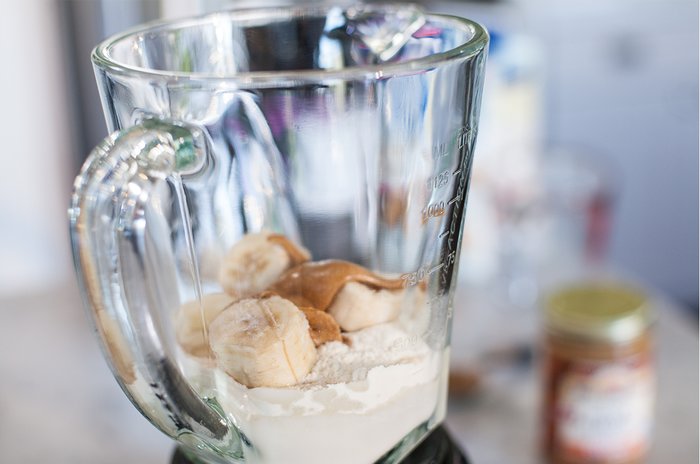
Weight-gainer shakes are high-calorie drinks or smoothies that let you rapidly ingest a ton of calories along with protein and other macros. Use them as a quick but substantial meal replacement when you're on the go, drink them with meals for extra calories, or snack on them before bed.
There are two basic ways to do gainers: You can buy a mass-gainer supplement, or make your own. There are benefits to both. Making your own with real foods provides more micronutrients, but the muscle-gainer powders are definitely convenient. Even if you plan to mostly DIY it, having a powder is great for those times it isn't practical to break out the blender. Keep one of our best muscle-building protein powders on hand for these situations.
How To Make Your Own Weight-Gain Shakes
Start with protein powder and add extra calories any way you can. Get creative! Pick at least one ingredient from each category and blend until smooth.
- Protein: whey protein powder, plant protein powder, mass gainer powder, Greek yogurt, silken tofu
- Carbs: fruit, honey, molasses, oats, sweet potatoes (seriously!)
- Fats: nut butters, coconut oil, tahini, avocado, avocado oil
- Liquid: milk, cream, almond milk, soy milk, coconut milk, coconut water, fruit juice
6 Monster Weight-Gain Shake Recipes
To get you started, here are six monster shakes to power your massive gains, from registered nutritionist and competitive powerlifter Paul Salter, MS, RD. Three of them are perfect to drink any time you need some calories, and the other three are ideal for that post-workout period when your muscles are screaming for fuel.
How Much Protein, Fat, And Carbs Should You Eat To Gain Weight?

Protein
Protein is an important part of your weight-gain diet, but there's a point after which more protein isn't necessarily better—it's just more. You can find weight-gain diets that suggest you eat 2-3 grams of protein per pound of body weight, or even more, but registered dietician Doug Kalman, Ph.D., says beyond a certain point, all that extra protein may not do much to increase muscle mass. Instead, it could just empty your wallet and upset your stomach.
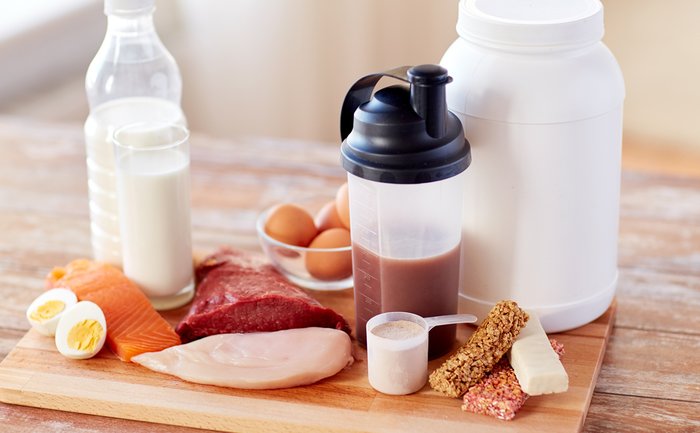
"As long as you're in the protein sweet spot of 0.8-1 gram per pound [of body weight], consider yourself covered. For most people, this breaks down to about 20-30 percent of total calories."
According to Kalman, the best plan is to space your protein out in 20-40-gram doses throughout the day.
Carbohydrates
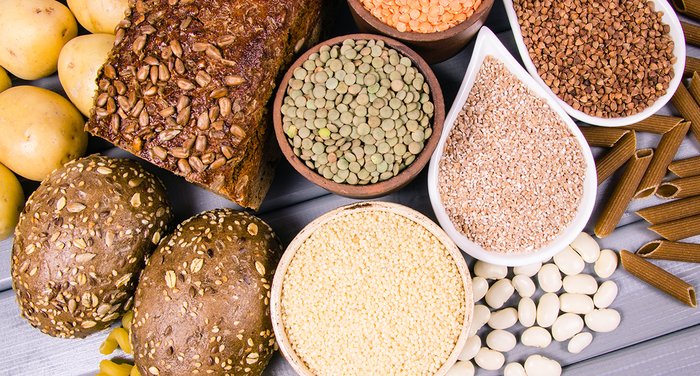
Shoot for 50 percent of total calories from carbs to support strength, size, and performance. Here are a couple carb tips from Kalman's video in Bodybuilding.com's Foundations of Fitness Nutrition course.
- "When you're looking to add weight, it is definitely NOT the time to go low-carb. Yes, you may see a slight decrease in muscle definition when you're adding weight. That's OK. Every pound of muscle you add now will make it easier to become more defined later."
- "Even if you're bulking, keep added sugars as low as possible. There is really nothing to be gained by relying on them, other than pounds of fat. Whole grains. Veggies. Fruit. These are your carbs—eat lots of them."
Fat
Fats are an important part of the human diet. They help you digest certain types of vitamins and maintain optimum hormones and brain function, among many other crucial functions. But they are also the easiest way to add extra calories. Each gram of fat contains 9 calories, more than twice the number of calories per gram as protein and carbs, which both contain 4 calories per gram.
Along with all this energy, fatty foods also usually taste really good. But this doesn't mean you should stock up on donuts. Prioritize fats from quality sources including nuts, seeds, avocado, meat, and olive oil and you'll get all the benefits, without the empty calories.
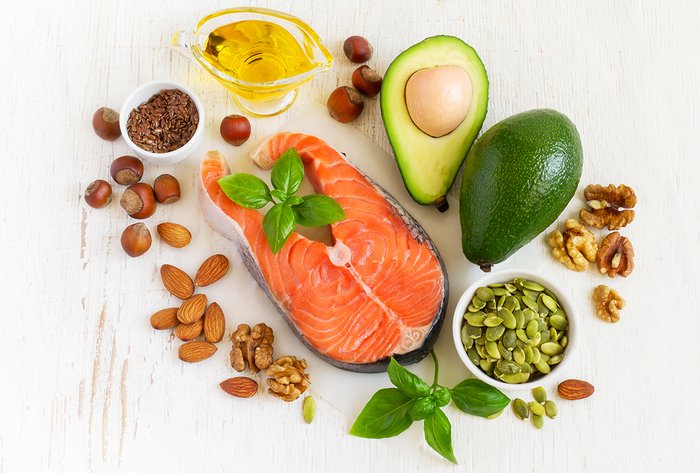
Fats also have the lowest thermic effect of food compared to carbs and protein. That means that your body burns anywhere from 5-30 percent fewer calories digesting fats than it does the other two macronutrients.[1,2] The fewer calories your body expends to digest the food, the more weight you can retain.
An easy way to up your diet's fat content is to cook your meat and vegetables in olive, coconut, or other calorie-rich oil. You can also add a little oil to your protein shakes—don't worry, you won't taste it. You can also sneak in some extra fat with your selection of protein. Instead of going for super-lean meat, choose 80/20 ground beef, chicken thighs instead of chicken breasts, and look for a little more marbling in your steaks. Good options include rib-eye and T-bone.
How Many Calories Do You Need To Gain Weight?

You may think of calorie counting as something people only do for weight loss, but it can be just as important for helping with weight gain, especially if you're not seeing a lot of change in your physique. Sometimes you're just not eating as much as you think you are.
The formula for gaining weight is really pretty simple: The amount of calories you take in has to be larger than the amount of calories you burn. To get a feeling for how many calories you'll need to put on weight, start by using this calculator to determine your total daily energy expenditure (TDEE).
When you use the calculator, it will ask you to choose an activity level that best represents your lifestyle. Be honest! If you say you're very active and you're not, it's not going to help you gain quality muscular weight.
Once you get your TDEE number, add at least 500 calories to it. Continue eating at least 500 over your TDEE for a couple weeks to see what happens. If you don't notice any change in your weight, increase it to 750 or even 1000 calories above your TDEE.
For those who are new to counting calories, registered dietitian Doug Kalman, Ph.D., explains how to do it in Bodybuilding.com's Foundations of Fitness Nutrition course.
"Create a food diary. Record both what you eat, and how much. Then, take that information, and plug it into any of the many free nutrition database websites, and get your baseline calorie and macronutrient breakdown. With a cheap food scale, this is actually a lot easier than it was just a few years ago."
If you start gaining weight too quickly—like more than 2 pounds a week for several weeks straight—drop it back down to 200-300 extra per day. With the right calorie intake and the right workout, you can expect an increase of 0.5-1.5 pounds in body weight each week. If you're nowhere near that range, adjust your calorie intake.
How To Train For Weight Gain

Strength training is essential when weight gain is the goal. On a hormonal and muscular level, there's nothing better to give your body an unmistakable message to grow. Plus, it just makes you hungry!
When you're working on gaining weight, the most important thing is to make sure you're doing some kind of strength training at least 3-4 days a week without exception. What style you do matters less than doing it consistently. You can gain weight doing bodyweight workouts in your living room if they're sufficiently difficult and you're eating right! But weights and a gym can also be a great tool for weight gain if you have access to them.
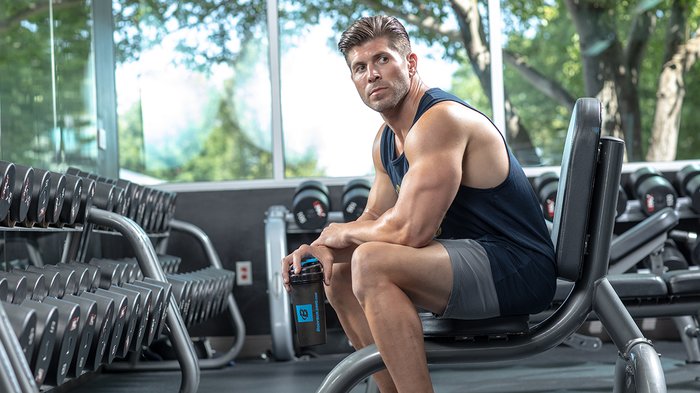
If you really want to optimize your gains, here are some guidelines:
- Stick with strength and hypertrophy-focused protocols. These can look many different ways, but most of them involve lots of work using multiple sets of 8-12 reps with between 60-80 percent of your one-rep max. This type of training has been shown to cause significant increases in the muscle-building hormones testosterone and growth hormone.[3] You may do some higher-rep burnout work or lower-rep strength work, as well, but having some of your training in that muscle-gain "sweet spot" is a good idea.
- Train hard, but also give yourself time to rest in between sets. When in doubt, rest 60-90 seconds between hard sets of 8-12 reps. Why? Because if you push it to the limit each set and then dive back in right away, you'll recover so little that you'll probably accomplish less total work over the course of a workout. Adequate rest periods will also help get your heart rate down before you begin your next set. Keeping your heart rate lowered will help you protect those calories you're eating so you don't use all of them up while training.
- As you gain weight, try to push, pull, or squat more weight. Muscle and strength go hand in hand! And "mechanical tension," which is the tension your muscles generate when struggling against a heavy weight, is one of the known mechanisms of muscle growth. The others include cell swelling (aka "the pump"), and muscle damage, which is what you're doing in those hard sets of 8-12 reps.
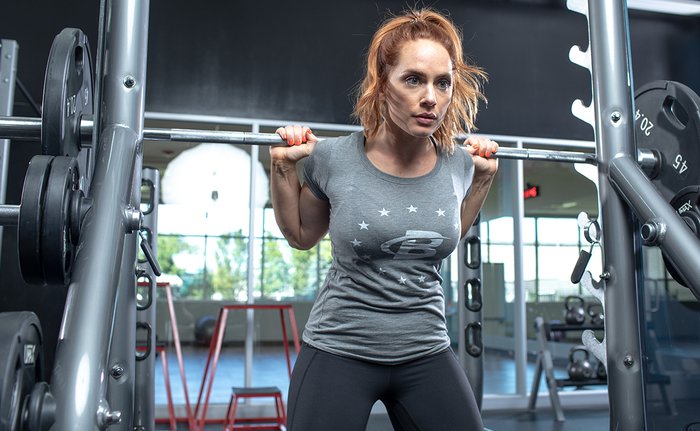
- Exercise selection is just as important as the number of sets you do. Put another way, you're not going to get huge doing nothing but wrist curls! Big lifts, including the squat, bench press, deadlift, row variations, and shoulder press, are tough to beat for packing on the most mass. But you can still do single-joint work. Leg extensions and curls, lateral raises, and arm workouts can still help increase strength and size by maximizing cell swelling.[4] No, they're not enough on their own, but they do have their place!
- Don't feel like you have to be your own nutritionist and personal trainer. Sorry, but you're probably not qualified! Try programs that have been shown time and time again to help people gain weight and see increases in muscle and strength.
Weight-Gain Tips: 16 Little Ways To See Better Results

Eat more food, lift more often, gain more weight. Sounds easy, right? News flash: It's not.
Luckily there are tricks and habits that can help you gain weight a little faster and easier. They aren't huge, groundbreaking solutions, but they'll allow you to fine-tune your plan and maybe stick with it a little longer—and that can definitely pay off big over the long term.
1. Never train while hungry. Going into a workout without fueling your body beforehand will limit the intensity you bring to a workout. It can also force your body to get energy by tapping into muscle tissue. You won't gain much weight when that's going on.
2. If you train in the morning, make the biggest meal of your day the one you have immediately after your morning workout. When you finish a workout, your body is in a state where it will suck up any calories you supply it with. If there is one time of day you want to slam back a higher calorie shake, this is it.
3. Ideally, eat every 3-4 hours. No, you don't have to go full bro eating eight or more meals a day, but never go more than 5 hours without eating. Spread your calories throughout the day, especially protein.
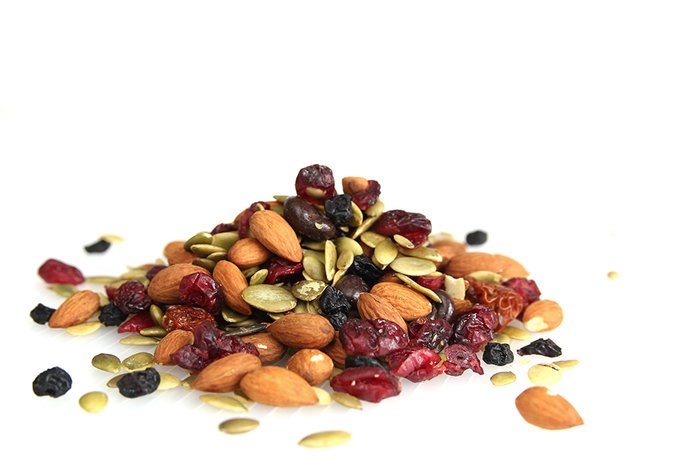
4. Don't leave the house unprepared. Keep wholesome snacks on hand, like trail mix and peanut butter sandwiches—seriously! This old classic is a weight-gain miracle. Always carry a shaker bottle (maybe even a big one) with protein or weight-gain powder in it in case you're caught without food.
5. Remember that you don't have to follow the usual no-salt, no-butter, no-flavor rules. They can all have a place, within reason. You need to eat more, and if your food doesn't taste good, it's simply not going to happen.
6. Consider a post-workout protein shake to be a requirement. Why? It digests quickly and takes up little space in your stomach, so you can eat soon after.
7. Resist the urge to follow any popular diet like intermittent fasting, keto, or paleo. These all have their place, but they are all better suited to weight loss than weight gain. Focus on your goal now—you can always come back to them later!
8. At home, eat from bigger dishes than usual so you serve yourself larger portions without even realizing it. Same with your glassware: Put away those 8-ounce glasses and pull out those 16-ounce tumblers and fill 'em up with milk and protein shakes!
9. Gain with someone! If a friend is training and gaining alongside you, it becomes sort of a competition and a group project. It also puts "eating a lot" into perspective when you can see how much other people eat in comparison.
10. Follow a workout program designed to increase muscle or strength gains. A little light lifting and cardio isn't going to cut it. To build muscle, you need to give your muscles the signal to grow. If you don't, all those extra calories are just extra calories—not fuel for growth.
11. Make sleep a high priority—almost as high as eating and training. Your muscles don't grow when you're in the gym, they grow when you're resting! Old-school bodybuilders were famous for napping—because it worked. If your sleep sucks, you won't gain the way you would otherwise.
Sleep is restorative, allows you to train harder, and helps your anabolic hormones stay at high levels. Lack of sleep over time can also increase your cortisol levels.[5] Cortisol is a stress hormone produced by your adrenal glands that can stimulate muscle breakdown, which leads to loss of muscle mass—and weight.



Comments
Post a Comment